
CRISPR stands for Clustered Regularly Interspaced Short Palindromic Repeats
Repetitive DNA sequences, called CRISPR, were observed in bacteria with “spacer” DNA sequences in between the repeats that exactly match viral sequences. It was subsequently discovered that bacteria transcribe these DNA elements to RNA upon viral infection. The RNA guides a nuclease (a protein that cleaves DNA) to the viral DNA to cut it, providing protection against the virus. The nucleases are named “Cas,” for “CRISPR-associated.”
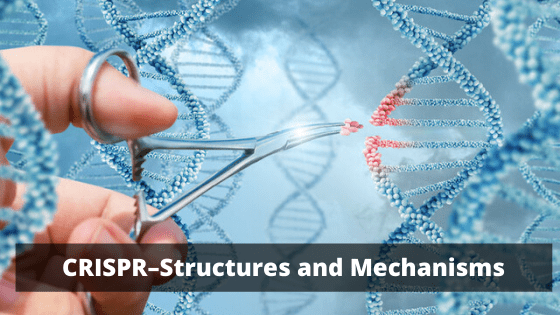
Genome editing
In 2012, researchers demonstrated that RNAs could be constructed to guide a Cas nuclease (Cas9 was the first used) to any DNA sequence. The so-called guide RNA can also be made so that it will be specific to only that one sequence, improving the chances that the DNA will be cut at that site and nowhere else in the genome. Further testing revealed that the system works quite well in all types of cells, including human cells.
Implications
With CRISPR/Cas, it’s easy to disrupt a targeted gene, or, if a DNA template is added to the mix, insert a new sequence at the precise spot desired. The method has profoundly changed biomedical research, as it greatly reduces the time and expense of developing animal models with specific genomic changes. JAX scientists now routinely use the CRISPR/Cas system for this purpose in mice. And for human diseases with a known mutation, such as cystic fibrosis, it’s theoretically possible to insert DNA that corrects the mutation. There are clinical applications in human trials now, including for engineering T cells outside of the body for CAR-T cancer therapy and for editing retinal cells for leber’s congenital amaurosis 10, an inherited form of blindness.
Limitations
CRISPR/Cas is an extremely powerful tool, but it has important limitations. It is:
- difficult to deliver the CRISPR/Cas material to mature cells in large numbers, which remains a problem for many clinical applications. Viral vectors are the most common delivery method.
- not 100% efficient, so even the cells that take in CRISPR/Cas may not have genome editing activity.
- not 100% accurate, and “off-target” edits, while rare, may have severe consequences, particularly in clinical applications.
For more info, get sample copy of this study here
References:
- theinsightpartners.com
- jax.org
 CRISPR Technology Updates